
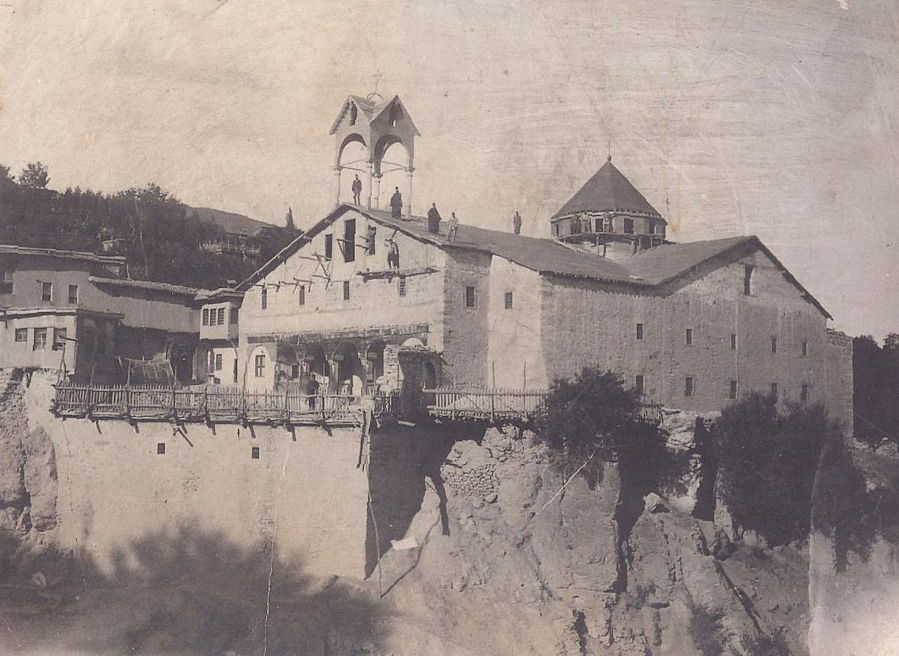
Cathedral of the Holy Mother of God, Arapgir
The monastery, known as the Monastery of the Virgin Mary, Surp Astvadzadzin Monastery, or Arapgir Ana Monastery, was an Armenian monastic complex located in the city of Arapgir. It was destroyed by dynamite by the Turkish government in 1957. It was one of the largest churches in Western Armenia. Built in the 13th century, it could accommodate approximately 3000 people. After the Genocide, the monastery was repaired and used as a school. However, in 1950, Arapgir officials decided to demolish the structure. This decision was implemented by the Turkish government in 1957, and the monastery was completely demolished. By decision of the local community, the monastery’s land was sold for 28.000 lira to a man named Hüseyin. Nothing of the church’s furnishings was saved. Only a gold-plated silver chalice, after traveling through various countries and passing through various hands, reached the Mekhitarist Monastery in Vienna.
The monastery was built of stone and limestone, with a wooden roof. Separate schools for boys and girls were located next to it. In the middle stood the spiritual administration building. Before its restoration, it had five altars separated by arches.
The church interior was adorned with silver lamps, gold and silver religious books and crosses, sumptuous vestments, and icons. All of these were provided by donations from the congregation, who contributed gold and silver coins to support the renovations, the care of the poor, and the continuation of the school and the clergy. Next to the monastery was a large cemetery surrounded by mulberry trees, and at the entrance was a small fountain.
Group: Religious Building
Type: Monastery
Century: 13th century
Geography: Arapgir, Malatya, Turkey
Latitude: 39.043395693096, Longitude: 38.483233946278
Alternative names:
Contributed by: Culture Inventory